


The August 2026 multifamily market presents investors with a mixed operating and capital-markets picture. National rent data point to modest improvement, but Houston remains under…
23/09/2026

14/08/2026
As the U.S. economy transitions out of a prolonged tightening cycle, two powerful tailwinds are reshaping the landscape for real estate investment: lower effective tax rates and a gradually improving cost of capital.
For investors seeking stable cash flow and long-term appreciation through real estate, especially via multifamily syndication, this is a rare opportunity to maximize after-tax returns and enhance capital efficiency.
Table of Contents
The average cap rates have stabilized around 5.7%, while vacancy rates remain healthy at approximately 6.5%. These metrics reflect sustained demand across key multifamily markets.
According to a report, nearly $1 trillion in commercial real estate debt matures in 2025, a signal that capital is on the sidelines, ready to be deployed into attractively priced deals.
Most notably, interest rates have begun to ease over the past three months, triggering improved debt financing conditions and an uptick in transaction volume across multifamily assets.

The U.S. corporate tax rate remains at 21%, offering a business-friendly environment for long-term investors. More importantly, several real estate-specific tax incentives are being preserved or expanded in 2025:
For multifamily syndication investors, these tax advantages significantly enhance after-tax yield. Through cost segregation studies, passive investors (LPs) can often claim significant paper losses in year one, offsetting taxable income, even while receiving positive cash flow distributions.
Cost of capital, the blend of debt and equity financing, is a critical determinant of deal viability in real estate. Between 2022 and 2024, rising interest rates created headwinds for both acquisitions and refinancing.
But in 2025, the narrative is shifting:
Crucially, lower effective tax burdens enable investors to accept lower pre-tax returns while still achieving targeted after-tax IRRs; thereby reducing the cost of equity and improving deal feasibility.

When low tax rates and falling cost of capital converge, the impact on investment performance is exponential, not additive.
For experienced syndicators (GPs), this is a prime opportunity to structure deals that are both attractive to Limited Partners (LPs) and sustainable through the hold period. Those who can underwrite conservatively while leveraging tax and financing tailwinds will lead the market.
As market conditions evolve, investors in multifamily syndications are focusing on several key themes:
These factors reflect how experienced investors are navigating today’s market—balancing opportunity with a focus on risk and long-term performance.
The 2025 U.S. multifamily market isn’t waiting for anyone. With favorable tax laws still in effect and capital costs trending downward, the conditions are lining up for a new wave of strategic acquisitions.
This is a pivotal moment to:
Are you positioned to take advantage of this moment?
If you’re considering multifamily syndication or want to evaluate your tax and capital strategy more deeply, let’s connect. I’m always open to discussing actionable insights and potential collaborations with serious investors.
Disclaimer: This post is for informational purposes only. not investment advice. No recommendation or advice is being given. All of the content, including commentaries, sponsorships, ads, and affiliate links, is not financial advice or endorsements. We are not responsible for any losses from relying on this article.


Table of Contents

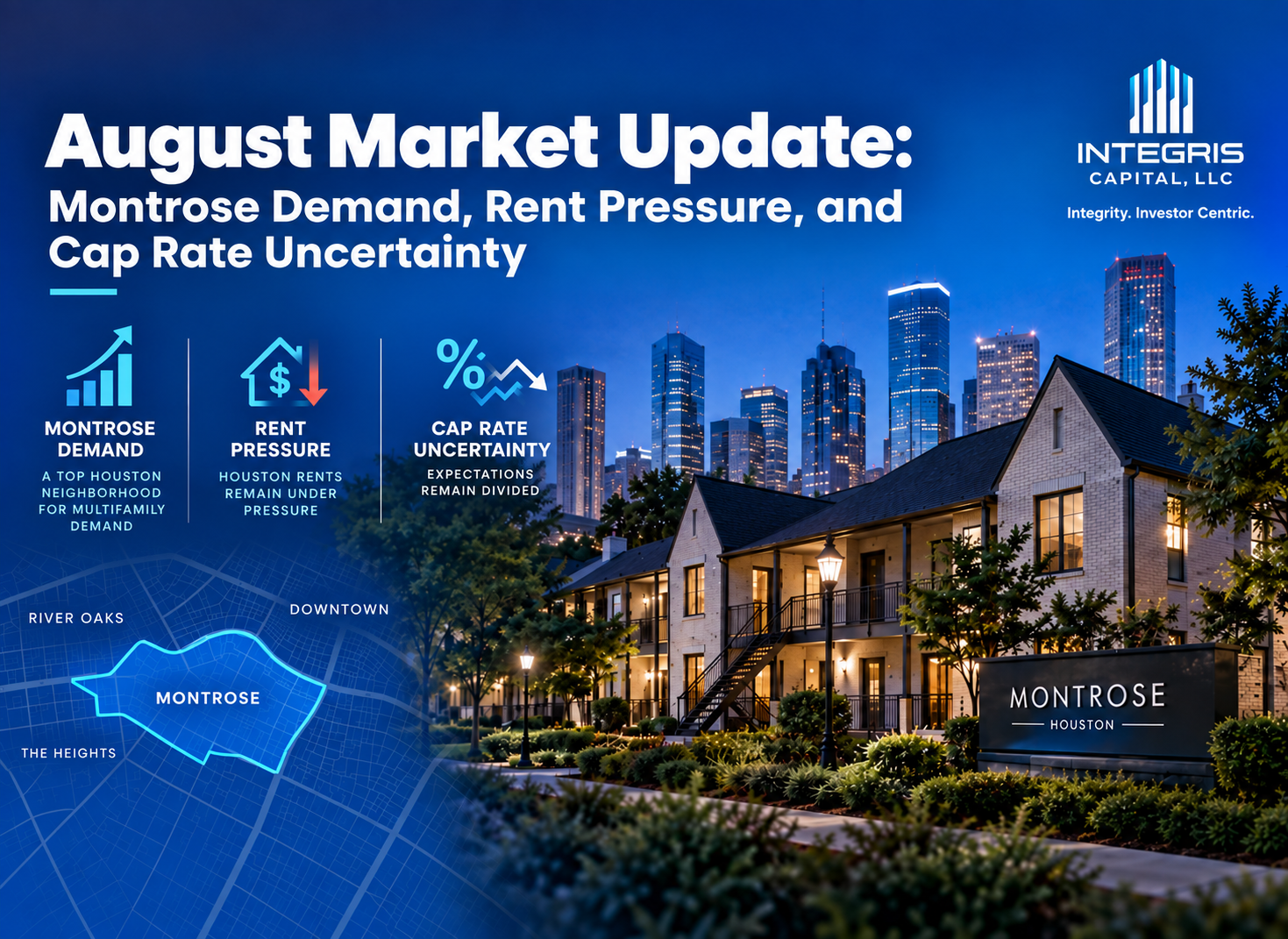
The August 2026 multifamily market presents investors with a mixed operating and capital-markets picture. National rent data point to modest improvement, but Houston remains under…
23/09/2026

July 2026 Multifamily Market Update: Houston Moves Toward Selective Rebalancing
The July 2026 multifamily market is showing a more constructive setup for Houston investors, but the evidence points to selective rebalancing rather than a broad…
04/09/2026

June 2026 Multifamily Market Update: Basis, NOI & Execution
The June 2026 multifamily market is showing signs of stabilization, but the improvement remains selective. National rent growth is positive but muted, occupancy remains a…
03/09/2026

May 2026 Multifamily Market Update: Rent Growth Returns as Supply Slows and Demand Holds Strong
The May 2026 multifamily market is showing signs of a measured reset. Rent growth has returned, new supply pressure is beginning to ease, and long-term…
03/09/2026

April 2026 Multifamily Market Update: Where Operational Upside Meets Better Basis
The April 2026 multifamily market update points to a transitional environment for investors. Capital-market sentiment is improving, but operating fundamentals remain mixed. National rent growth…
03/09/2026

February 2026 Multifamily Market Update: Supply, Rates and Houston Investment Signals The multifamily market is not fully recovered, but several important conditions are beginning to…
03/09/2026


